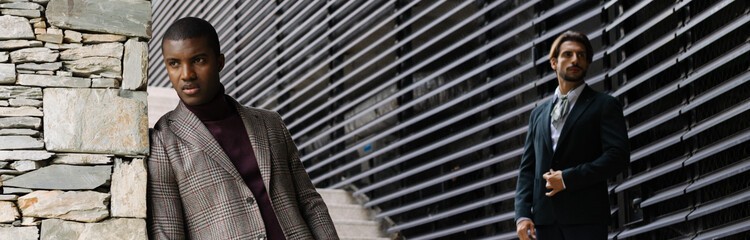






When Spring comes, the conversation around menswear tends to drift towards freshness — lighter fabrics, brighter days, and colours that feel more appropriate to the changing season. Yet many men approach the warmer weather with hesitation. Light colours, they believe, risk looking casual. Subtle patterns, they fear, may appear flippant. The result is usually a wardrobe still anchored in navy and charcoal long after the season has turned.
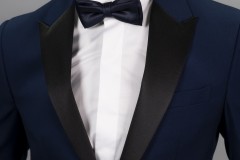
However, lightness, when handled properly, is not a compromise of authority. It is an expression of confidence. The secret lies in understanding that colour alone does not define a garment’s formality; structure does. A well-cut jacket in stone or ivory shows presence through its shoulders, its lapels, and the way the fabric holds the body’s line. Tailoring gives light colours their discipline.
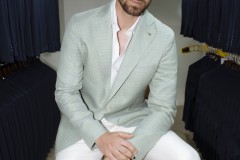
This is why spring menswear works best when built around a restrained palette of neutrals. Stone, ivory, and beige are not merely lighter alternatives to darker winter tones. These colours serve a specific role in a gentleman’s wardrobe. Stone, with its cool grey undertone, provides the authority of a darker suit while being appropriate in daylight. Ivory softens formal tailoring, making it particularly suited to spring ceremonies and social occasions. Beige, warmer and more adaptable, bridges the space between professional and leisure settings.
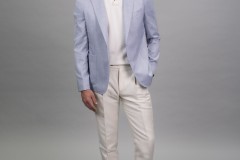
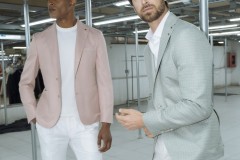
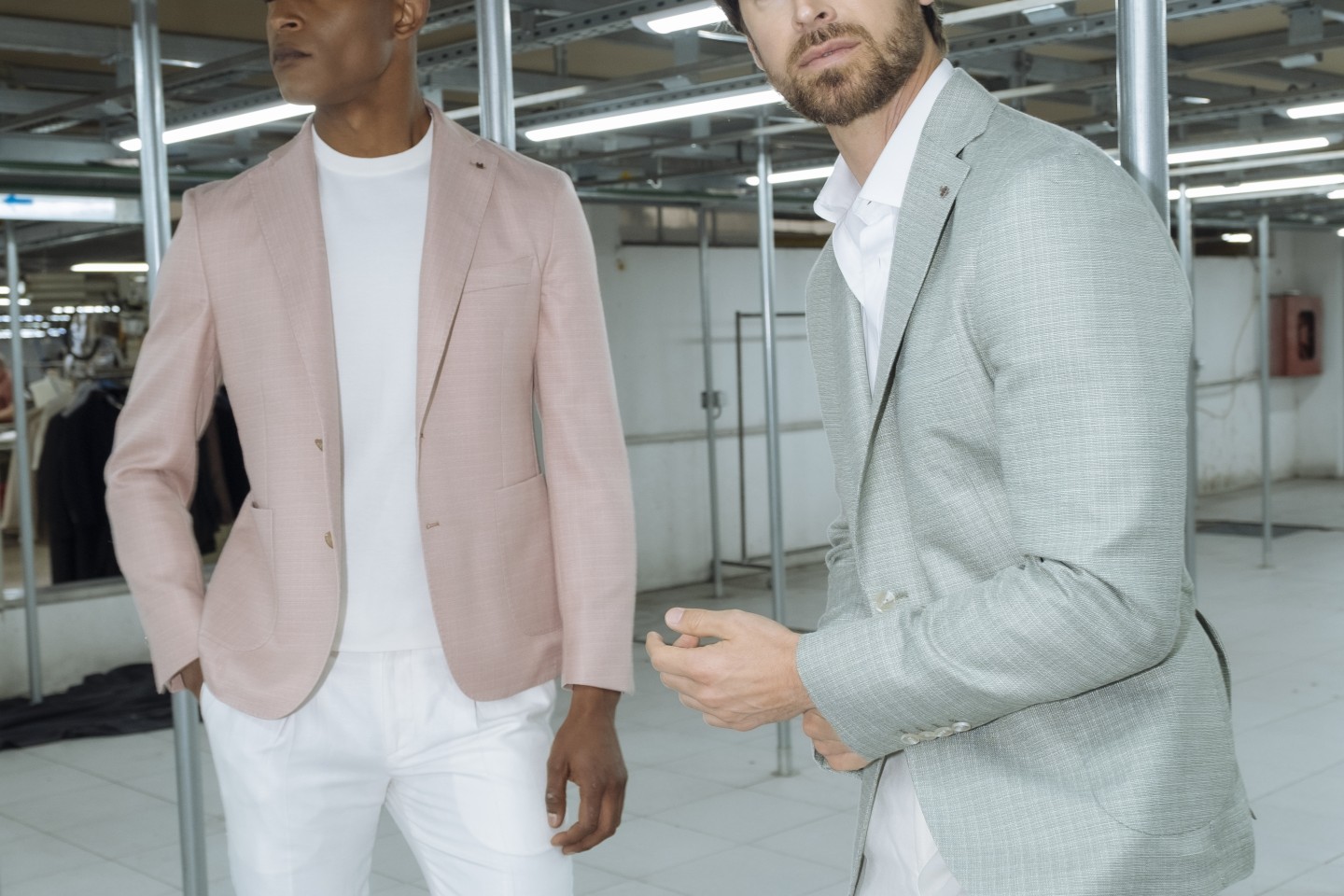
Beyond the classic neutrals, spring also opens the door to a quieter spectrum of colour. Soft pinks, pale blues, and other pastel tones can add a stunning level of sophistication when properly used. A baby blue jacket, for example, offers the freshness of colour while maintaining the composure expected in tailored menswear. A muted pink shirt or waistcoat introduces warmth without overwhelming the look. These shades work best when balanced against neutral foundations or as a monochrome look, which allows the colour to come across as intentional. In the right proportions, these lighter hues do not soften a man’s presence whatsoever.


The way they interact with light truly distinguishes these colours. Dark tones absorb attention, but lighter tones reflect it. In the daylight — whether in an office, a café terrace, or a spring event — this reflection gives meaning to a man’s choice. A man dressed in well-structured light tailoring looks composed, approachable, and deliberate.
Patterns follow a similar principle. In spring, moderation becomes more valuable than contrast. Fine checks, tonal stripes, and textured weaves introduce depth without overpowering. These patterns reward a closer look rather than asking for immediate attention. For any gentleman, this subtlety is exactly the point. Taste is not meant to be loud.
Fabric also plays a great role. Lighter colours reveal quality more quickly than darker ones. Inferior cloth creases easily, loses its shape, and reflects light unevenly. Premium wool blends, on the other hand, maintain their structure while remaining breathable enough for warmer days. When cut well, they move naturally with the wearer — a simple reminder that elegance is felt as much as it is seen.
At Torre Uomo, this philosophy guides our approach to spring tailoring. The goal is not to reinvent your wardrobe each season, but to fine-tune it. These are garments designed to work in the world as it is: from professional settings to social gatherings, from daylight meetings to evening events.
Spring does not ask a gentleman to abandon seriousness. It simply invites him to express it with a lighter hand. And in menswear, as in life, the ability to do more with less is often the clearest mark of sophistication.